How to Make No-Fail Gluten Free Pizza Crust (Soft & Bendable)
The Ultimate No-Fail Gluten Free Pizza Crust (That Actually Bends!)
For many of us transitioning to a gluten free lifestyle, the hardest thing to say goodbye to is a good pizza. I remember my first attempt at GF pizza; it was so dry and brittle that it felt more like eating a flavored cracker than a pizza. It crumbled the moment I tried to lift a slice.
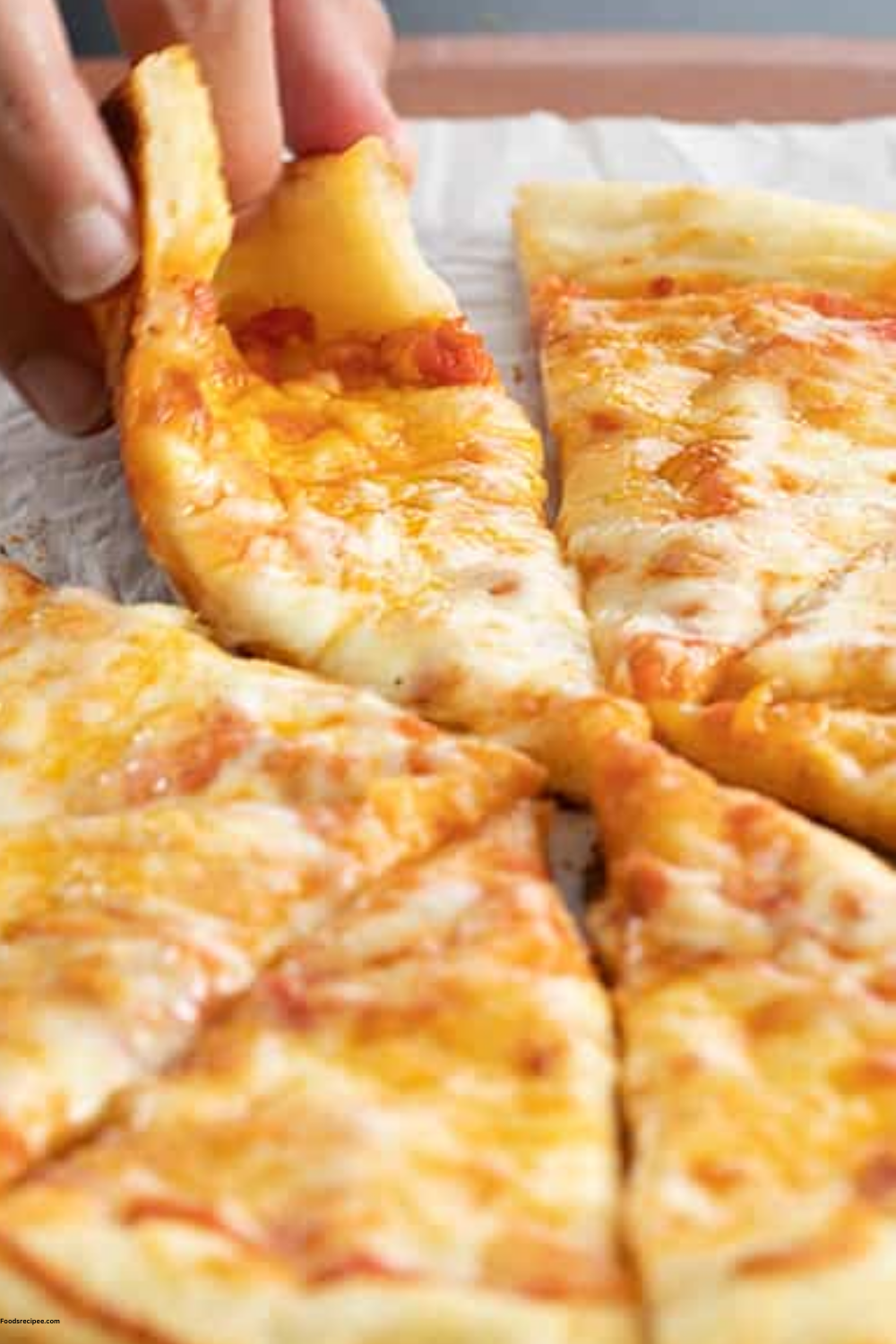
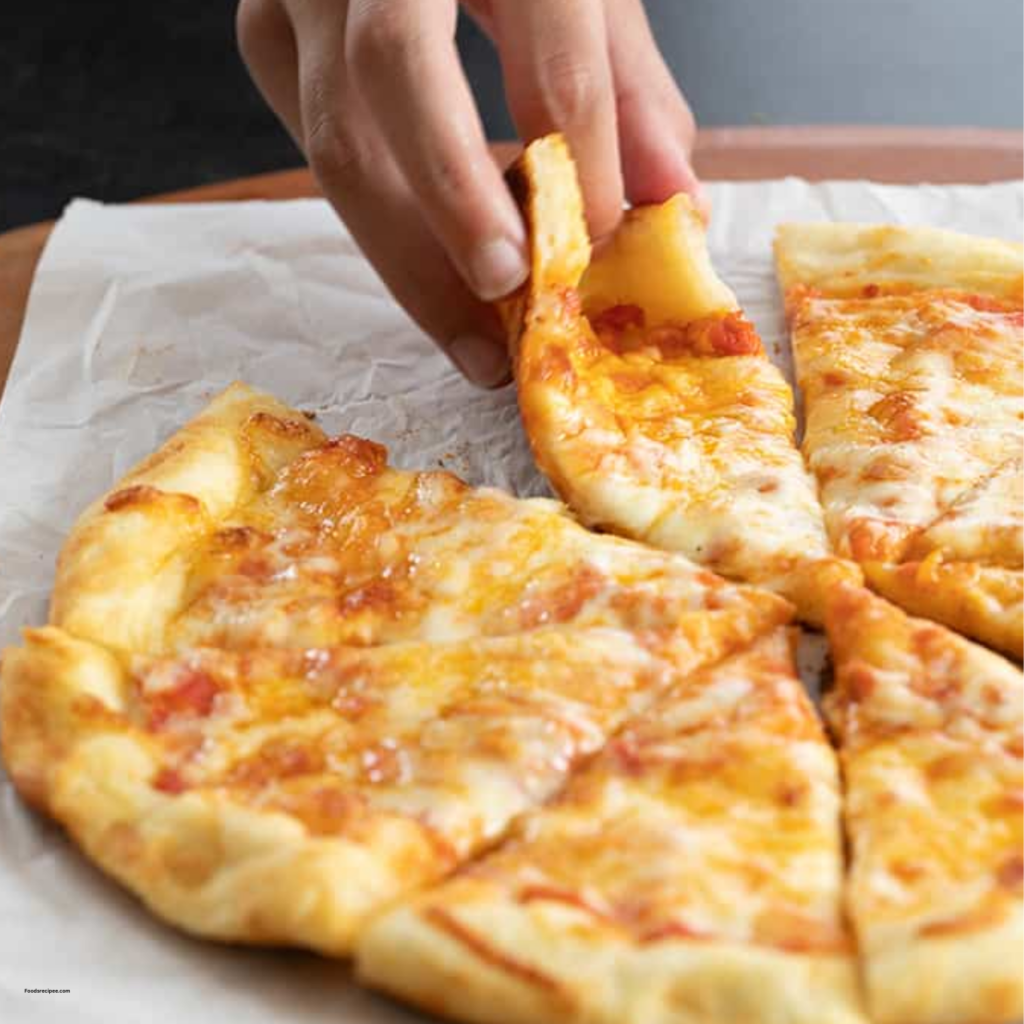
After months of experimenting with different flour blends and hydration levels, I finally perfected this Soft & Chewy Gluten Free Pizza Crust. This recipe doesn’t just “hold together”—it actually bends, has a beautiful chew, and develops those gorgeous golden air bubbles we all love.
Table of Contents
Why This Recipe Works
Most GF pizzas fail because they lack elasticity. Since we don’t have gluten, we rely on a combination of Psyllium Husk and Xanthan Gum.
- Psyllium Husk: Acts as a binder that creates a “gel-like” structure, mimicking the stretch of gluten.
- Tapioca Starch: Provides that essential “chew” and helps with browning.
Ingredients You’ll Need
- GF Flour Blend: 2 cups (Ensure it contains Xanthan Gum).
- Tapioca Starch: ½ cup (For extra stretch).
- Whole Psyllium Husk: 2 tbsp (The secret to a non-crumbly crust).
- Warm Water: 1 ½ cups (Approx. $110^{\circ}\text{F}$).
- Instant Yeast: 1 packet (7g).
- Honey or Sugar: 1 tsp (To activate yeast).
- Olive Oil: 2 tbsp (For a supple dough).
- Salt: 1 tsp.
Step-by-Step Instructions
1. Activate the Yeast
In a small bowl, combine warm water, honey, and yeast. Let it sit for 5–10 minutes until it becomes foamy. If it doesn’t foam, your yeast might be dead—start over!
2. Prepare the “Gel”
Whisk your psyllium husk into the yeast mixture and let it sit for 5 minutes. It will turn into a thick gel. This is what prevents your pizza from breaking.
3. Mix the Dough
In a large bowl, whisk the GF flour, tapioca starch, and salt. Pour in the yeast-psyllium gel and olive oil. Mix with a sturdy spoon or a stand mixer until a soft, sticky dough forms.
Note: GF dough is much wetter than regular pizza dough. Do not add too much extra flour!
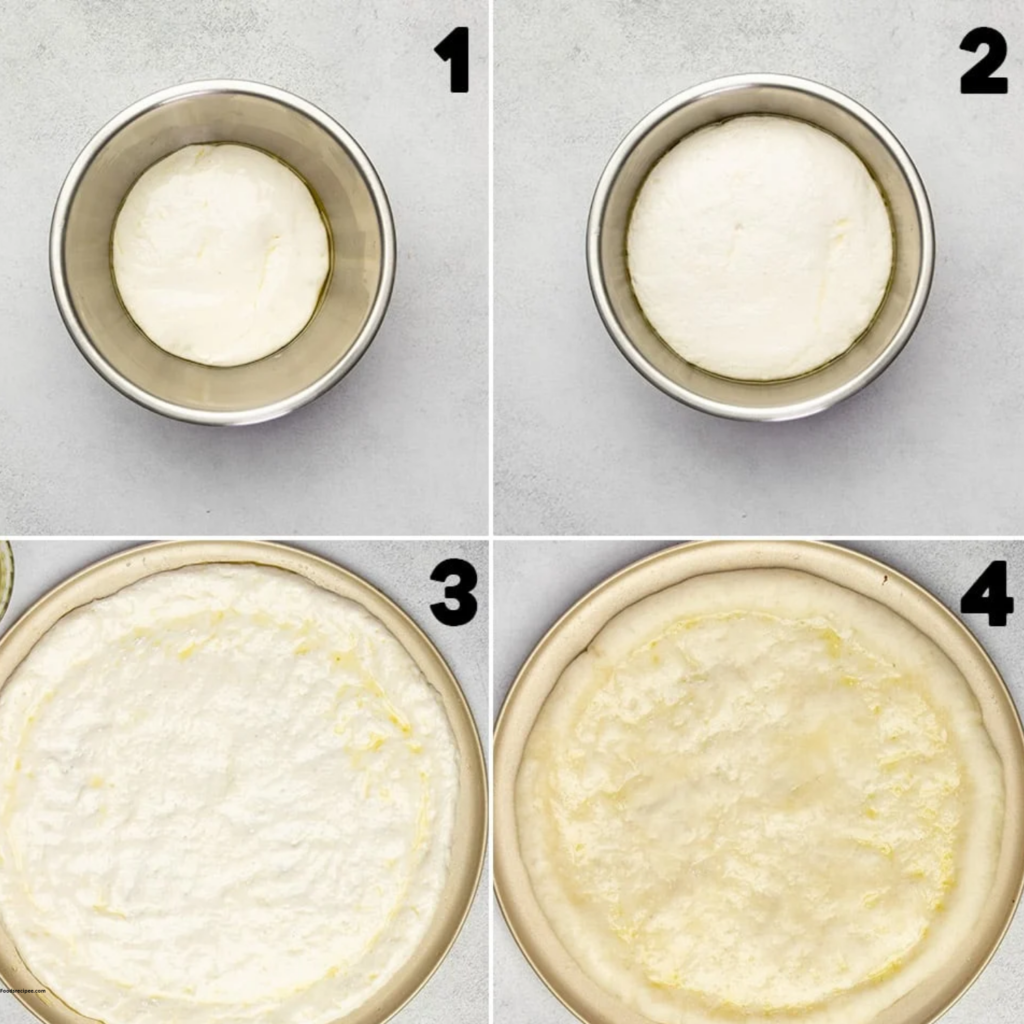
4. The First Rise
Cover the bowl with a damp cloth and let the dough rise in a warm, draft-free spot for 45–60 minutes.
5. Shaping the Crust
Place the dough on a piece of parchment paper lightly dusted with rice flour. Instead of a rolling pin, use oiled hands to gently press the dough into a 12-inch circle. Leave the edges slightly thicker for a “cornicione” (crust rim).
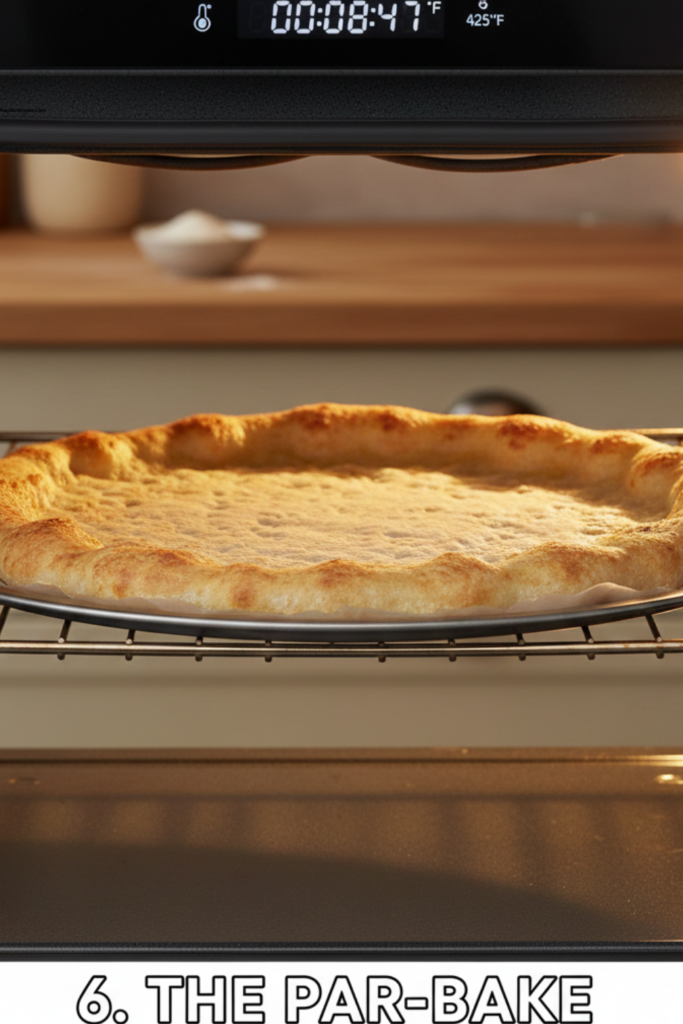
6. The Par-Bake (Crucial Step!)
Bake the plain crust (without toppings) at 425F, 220C for 8–10 minutes. This ensures the center isn’t “gummy” once you add the sauce.
7. Top and Final Bake
Add your favorite gluten free sauce, cheese, and toppings. Bake for another 10–12 minutes until the cheese is bubbly and the edges are golden brown.
Troubleshooting
- Why is my crust gummy? You likely didn’t par-bake it long enough or used too much sauce. Always par-bake!
- Can I make this dairy-free? Yes! This dough is naturally vegan. Just use your favorite dairy-free cheese on top.
- Steel vs. Stone: For the best results, use a Pizza Steel. It conducts heat faster than a stone, giving you a crispier bottom.
Frequently Asked Questions (FAQs)
Q: Can I freeze this pizza dough?
A: Yes! Par-bake the crust, let it cool completely, wrap it tightly in plastic wrap, and freeze for up to 3 months. Bake directly from frozen.
Q: Why does my crust look pale?
A: GF flours don’t brown as easily. Brushing the edges with a little olive oil or an egg wash before baking will give it a professional golden glow.
Q: Is this dough supposed to be sticky?
A: Yes! Unlike wheat dough, GF dough needs high hydration to stay soft. If it’s too dry, it will turn into a cracker.
Essential Equipment
- Pizza Stone or Steel: For that authentic crispy bottom.
- Parchment Paper: Essential for moving sticky GF dough.
- Stand Mixer (Optional): Helps incorporate the psyllium gel smoothly.
- Instant-Read Thermometer: To ensure your water is exactly $110^{\circ}\text{F}$.
Notes
- Water Temperature: If your water is too hot (above 130F, it will kill the yeast. If it’s too cold, it won’t rise. Use a thermometer!
- Dough Consistency: Do not be tempted to add more flour. GF dough should be much stickier than traditional wheat dough to stay soft after baking.
SPECIAL NOTE:
The real secret to a pizza that you can fold like a New York slice is the Psyllium Husk gel. Most recipes just throw the powder in with the flour, but by mixing it with water first to create a “gel,” you create a much stronger structural bond that prevents the pizza from cracking or breaking when you lift it.
Nutrition Information
Per Serving (1 Slice – based on a large 8-slice pizza)
| Nutrient | Amount |
| Calories | 195 kcal |
| Total Fat | 4.5g |
| Saturated Fat | 0.6g |
| Sodium | 290mg |
| Total Carbs | 36g |
| Dietary Fiber | 6g |
| Sugars | 1.5g |
| Protein | 3.5g |
Nutrition Disclaimer
Nutritional information is an estimate. Because gluten-free flour blends vary (some use rice flour while others use almond or sorghum), the actual values may change. Always check the labels of your specific ingredients for the most accurate data.